June brought wetter conditions across North Texas compared to May, with multiple rainfall events occurring throughout the month. Heavy rains over the Richland-Chambers watershed generated inflows to the TRWD system, increasing overall system storage from 89% at the end of May to approximately 91% by the end of June. The additional runoff provided a welcome boost in water supply, helping offset seasonal water demands and evaporation losses associated with early summer conditions.
As we move into July, hotter temperatures and higher evaporation rates are expected to contribute to seasonal declines in lake levels. However, the recent rise in storage has improved overall system conditions heading into the peak summer season.
What to Expect: Lake levels are expected to follow the “Normal Rainfall” or “Below Normal” trends shown by the green and yellow areas on the Lake Level Projection Plots. Actual lake levels may vary based on weather conditions, water use, and operational decisions throughout the month. Because July is historically one of the driest months in North Texas and typically one of the highest water demand months of the year, opportunities for significant increases in lake levels are generally limited.
June Highlights:
- Temperature: June was warmer than normal, with average temperatures approximately 2°F above normal at DFW (81.9° F).
- Rainfall: Most of the TRWD watersheds recorded slightly above-normal precipitation during June, as shown in the rainfall map below.
- Drought:
- Widespread rainfall events in June, particularly early in the month, left most of North Texas free of drought.
- Portions of the southern TRWD service area remain Abnormally Dry (D0) to Moderate Drought (D1).
- View the latest conditions on the NWS Drought Monitor.
Looking Ahead:
- ENSO Conditions: El Niño conditions are now present and are expected to strengthen into the Northern Hemisphere winter.
- Rainfall: Equal chances for normal precipitation are expected for July, while longer‑range outlooks indicate below-normal precipitation through the remainder of the summer.
- Temperatures: Above-normal temperatures are expected through the end of the summer.
- Looking Further: If El Niño strengthens as projected, North and Central Texas may see increased rainfall chances this fall. Local guidance currently shows a slight preference for above-normal fall precipitation, but outcomes can vary depending on other weather patterns. Recent strong El Niño years, including 2015 and 2023, have included notably wet fall periods in the DFW area.
*Note: ENSO, or the El Niño-Southern Oscillation, is a recurring climate pattern that influences global weather. It has two main phases: El Niño, which often brings wetter conditions, and La Niña, which typically leads to drier and warmer weather in Texas, especially during fall and winter. This shift is important for water resource planning, as it can affect rainfall and reservoir levels.
Stay Informed by Checking Out the Following:
- TRWD’s quarterly watershed protection newsletter, The Tributary.
- The latest Lake Level Projections (see below).
- Links to historical lake level plots.
- Past projections compared to actual outcomes.
Thank you for following the Lake Level Blog. Check back next month for more updates!
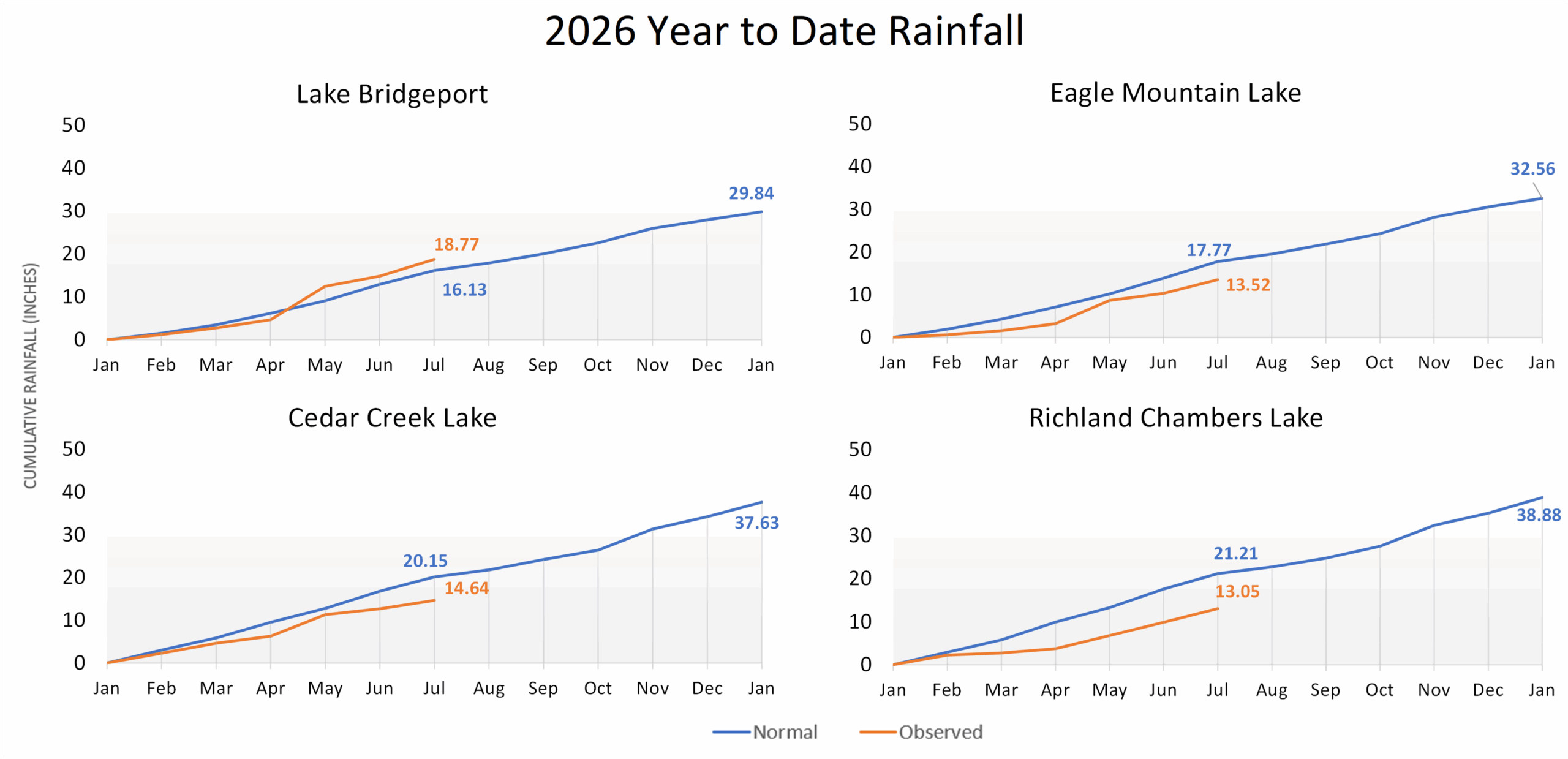
TRWD Watershed Rainfall
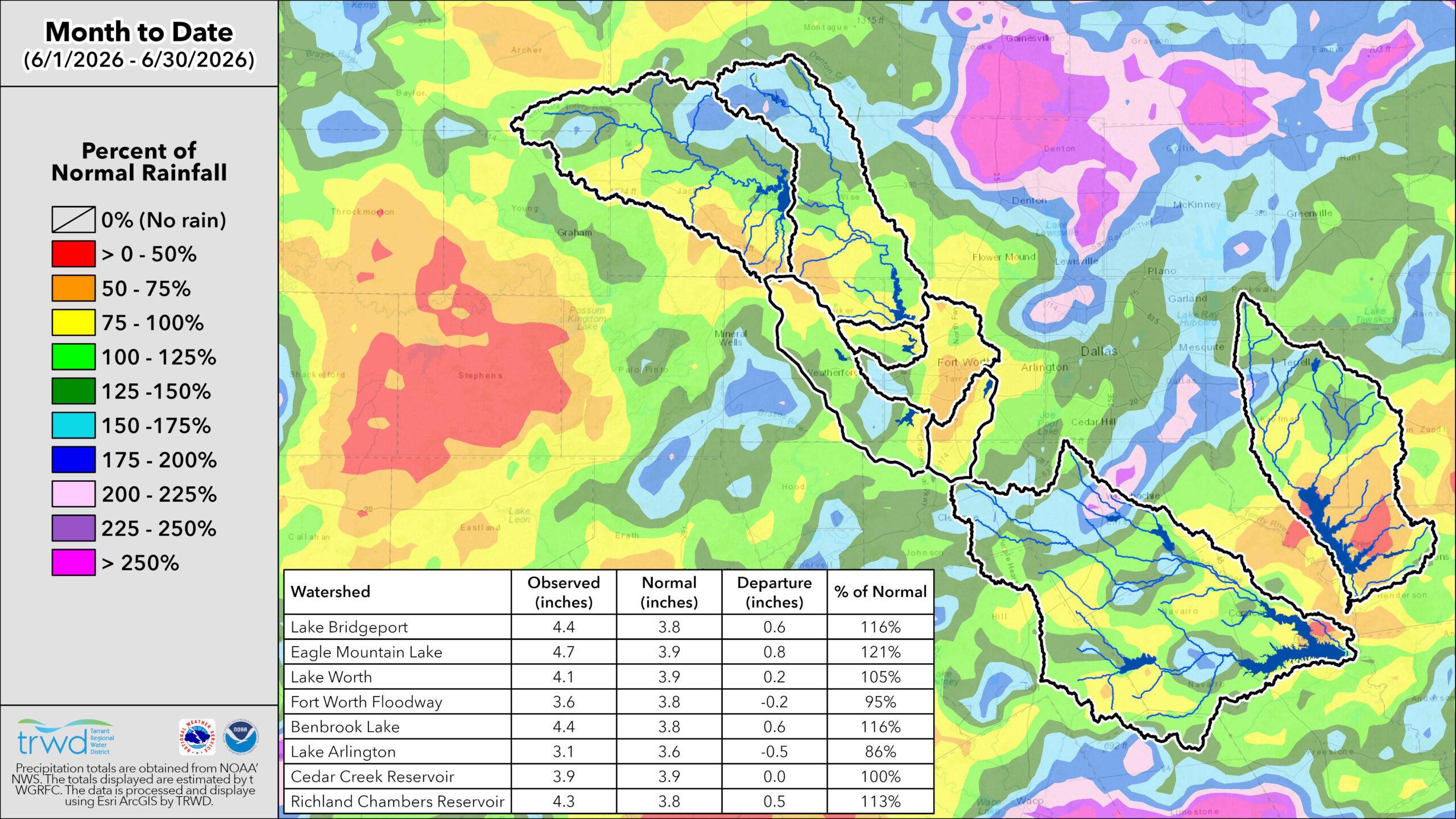
TRWD Lake Rainfall Totals through June 30, 2026
Lake Level Projections
Note: Lake level projections are based on expected climate conditions, water use demands, and planned operations, including releases and pumping. Actual lake levels may vary based on observed weather, actual water use, and operational responses to changing conditions.
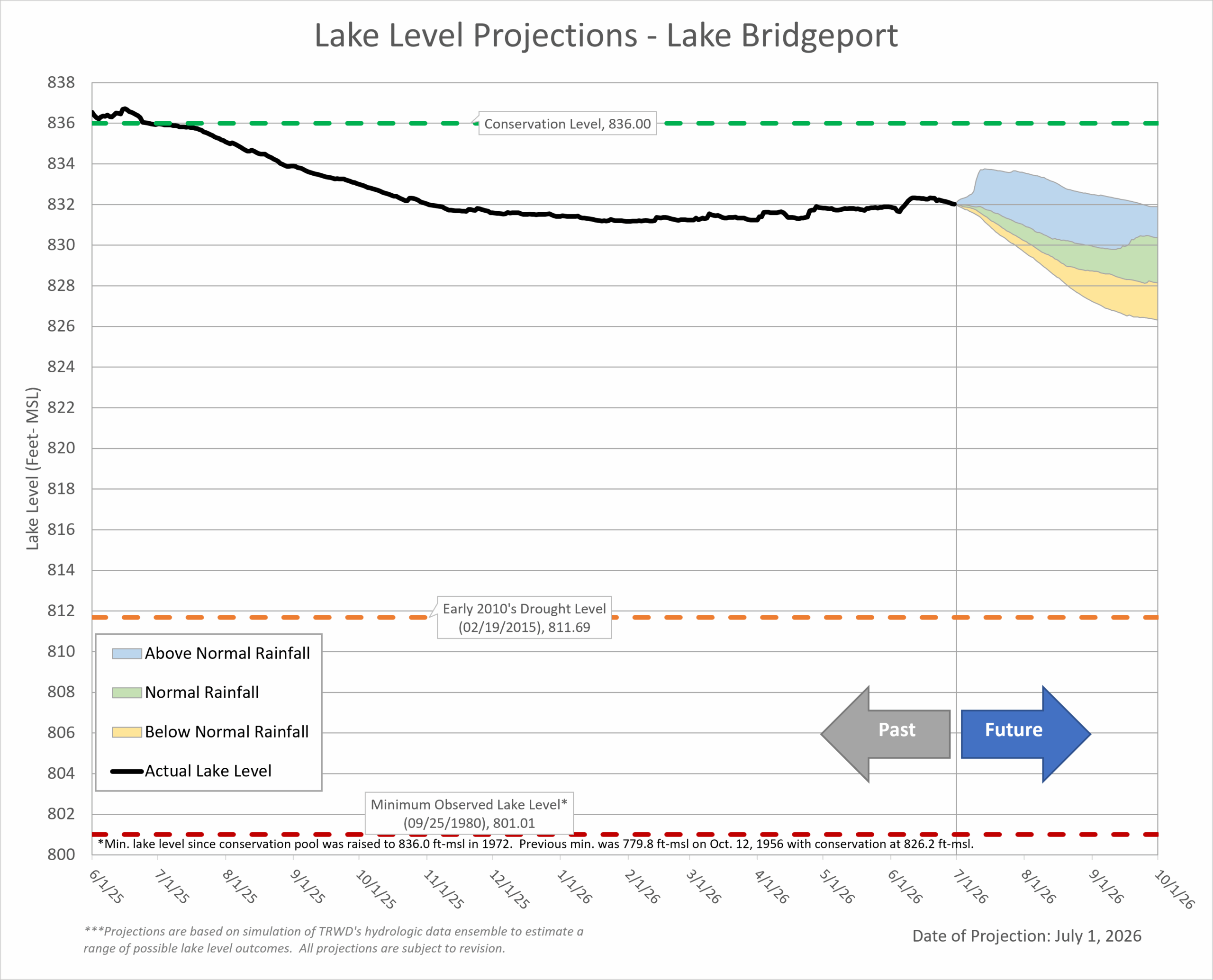 Last Month’s Projection | Historical Lake Levels
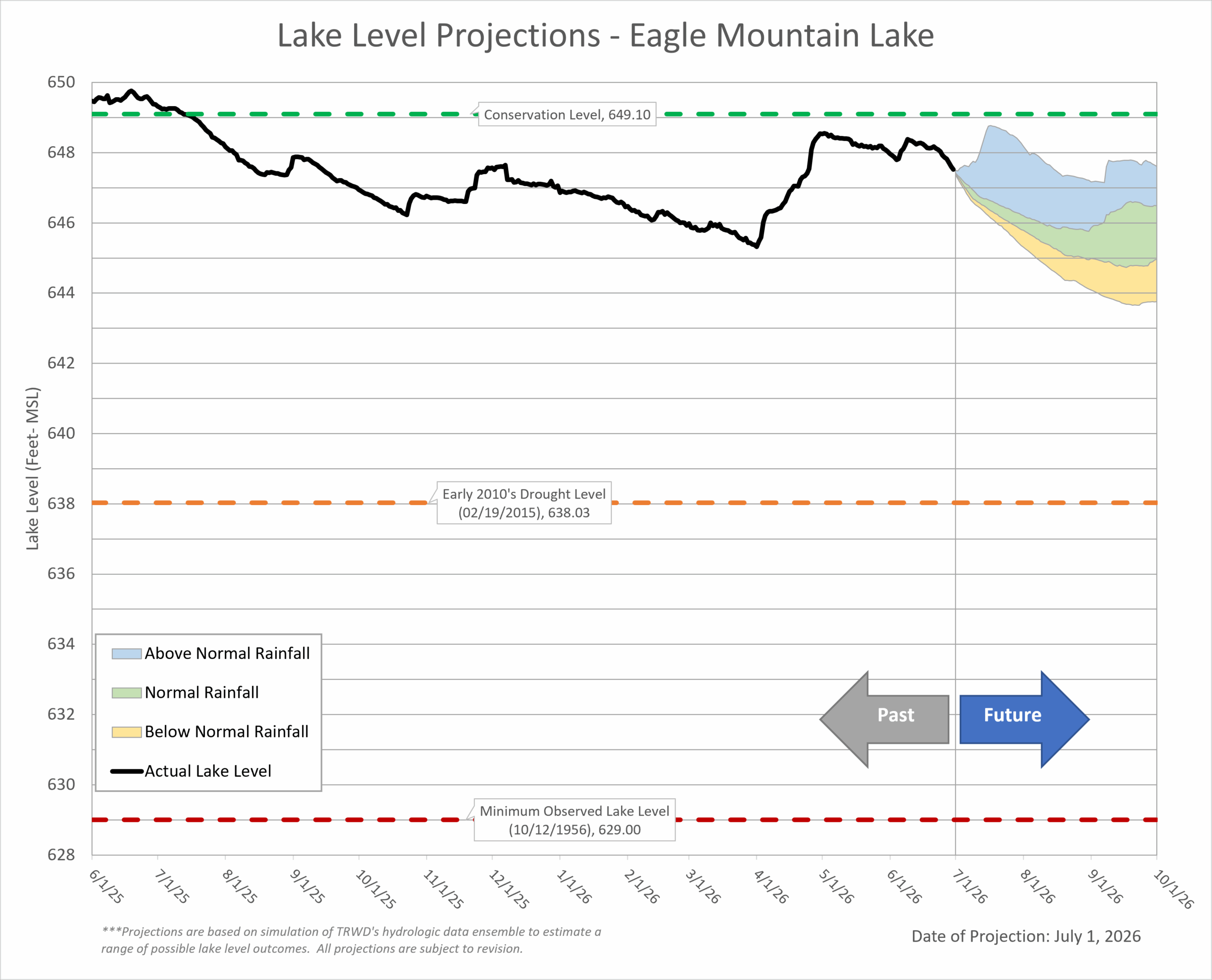 Last Month’s Projections | Historical Lake Levels
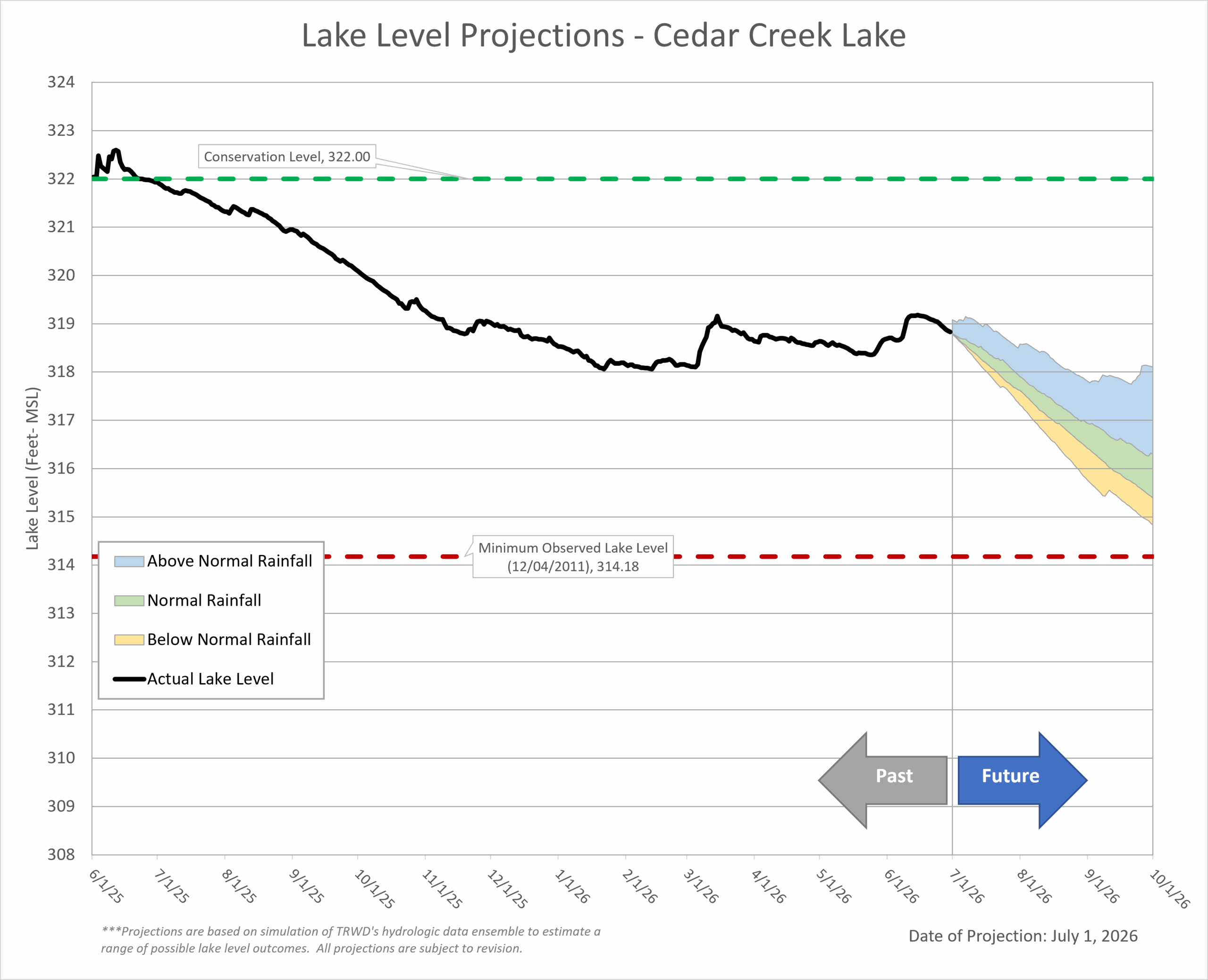 Last Month’s Projection | Historical Lake Levels
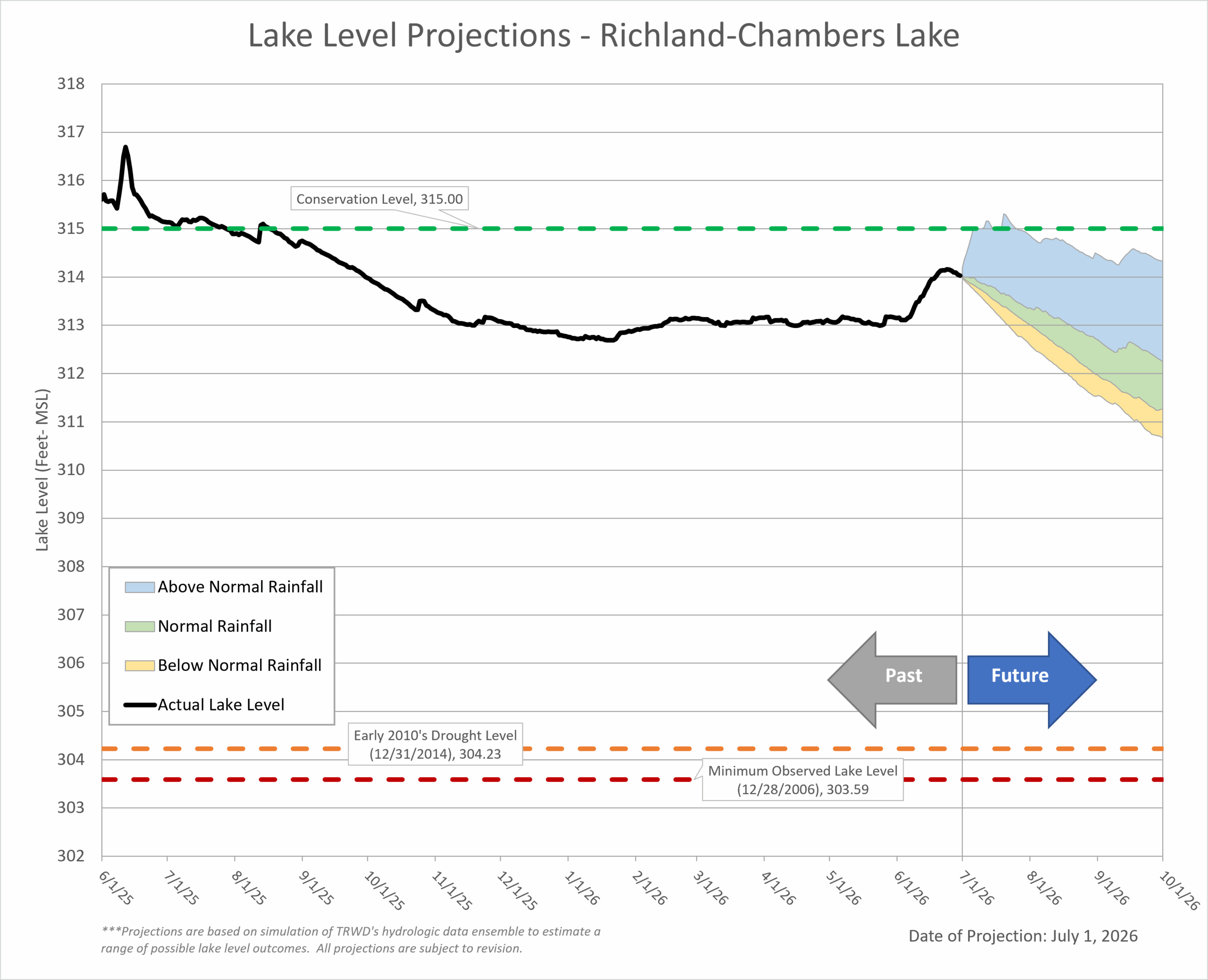 Last Month’s Projection | Historical Lake Levels
Disclaimer: These projections are based on typical operating conditions and expected weather patterns. Actual water use and weather can vary, so observed lake levels may occasionally be slightly higher or lower than the projected range.
Acknowledgments:
- Weather and Climate Insights: Special thanks to Vini de Oliveira and Craig Ottman.
- Reservoir Projections: A big thank you to Vini de Oliveira for his timely reservoir projections.
- Rainfall Analysis: Appreciation goes to Ashley Lowrie for her thorough analysis of observed rainfall.
- Editorial Review: Thank you to Olivia Whittaker for her thoughtful review and contributions the post.