By: Sally Crocker
The power of many can move mountains. Imagine, for example, more than 500 tons of trash cleared away from our local waterways, trails and surrounding areas. That’s the amount of debris that’s been cleaned up by community members over the last 30-plus years of the Tarrant Regional Water District Trash Bash, just one of the ways we can all pitch in for the environment.
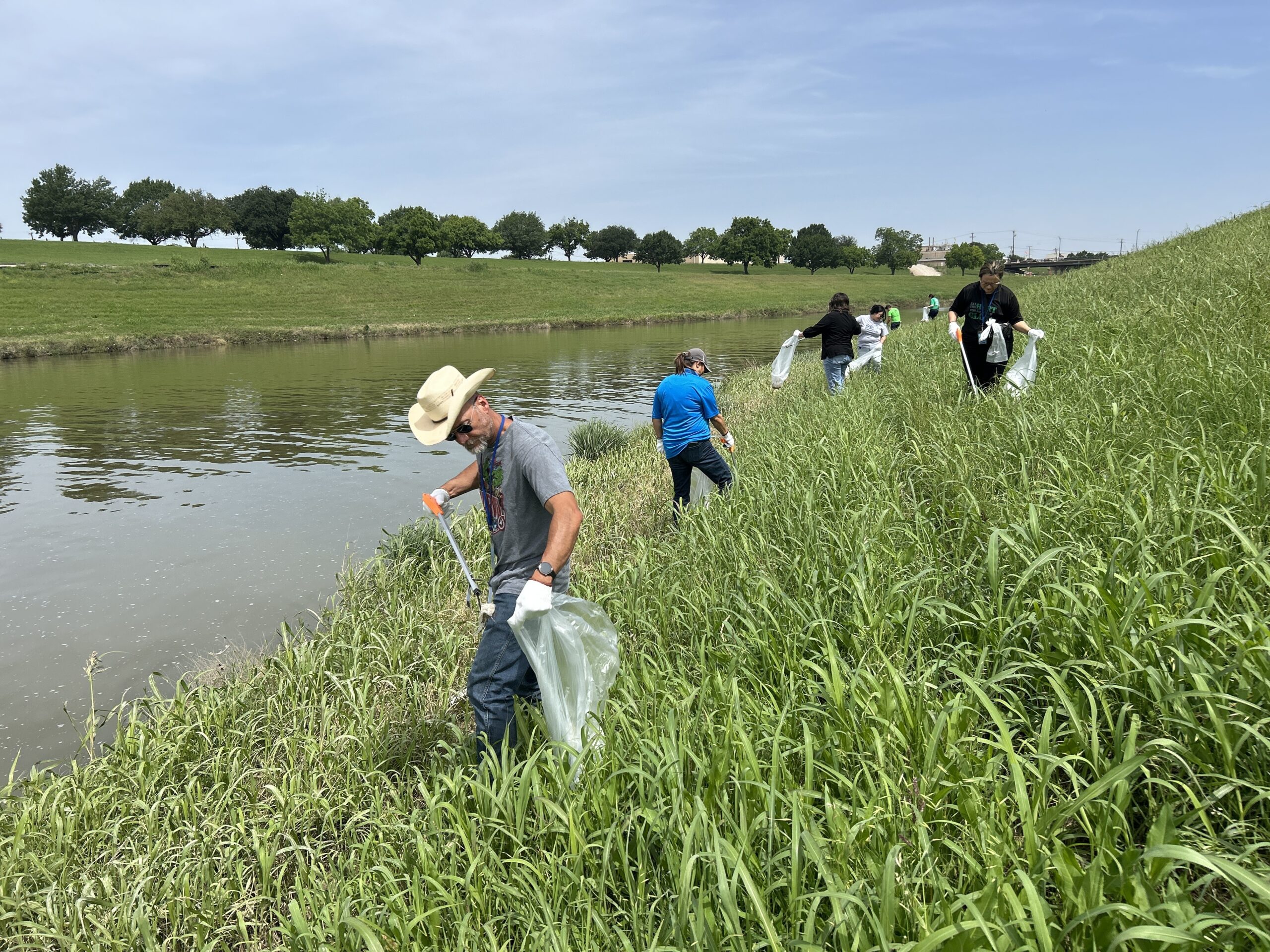
When it comes to community cleanup efforts, Trash Bash is one of the most popular. It started in 1992 as an annual fall event and is now held each spring as well. Teamwork is the name of the game, with friends, families, neighbors, co-workers and others coming together for a good cause and a good time. People can participate as a group or sign up individually to volunteer.
TRWD Recreation and Events Specialist Hermilo Muñoz, who works with the community to help protect our local trails and waterways, notes that spring 2026 Trash Bashes are coming up in March and April on the Trinity River and at Marine Creek Lake, Lake Bridgeport and the Richland-Chambers Reservoir. Registrations are open now.
“It’s a great way to take pride in the environment while having fun,” Muñoz says.
At each location, TRWD hosts an after-party with free food and live entertainment. T-shirts are also provided as a thank-you for volunteers.
Some people launch their kayaks, while others bring waders and trash grabbers to work in more shallow areas of the water. Whether working in or around the river, everyone makes an impact.
“Most people know TRWD through the Trash Bash events,” Muñoz says, “although we offer a number of other environmental stewardship opportunities as well.”
Adopt-A-Trail
TRWD Adopt-A-Trail is a way for community members and organizations to select and maintain their own space along different sections of the Trinity River and around Marine Creek Lake in Fort Worth. The program plans to add trails at Eagle Mountain Park later in 2026. Similar to adopt-a-highway programs, groups and participating individuals get signs marking their sections, along with free cleanup supplies as requested. There are 100 adoptable sections to choose from, with some designated for corporate sponsors.
“This is a hands-on, meaningful way of caring for our waterways and surrounding local areas. Maintaining the space throughout the year builds a really personal connection for these proud adopters,” Muñoz says.
Community Adopters, including non-profit organizations, social groups and families of 10 or more, can get on board for free. Corporate Adopters pay a $500 sponsorship fee, which offers special recognition and other business perks. Adopt-A-Trail proceeds help grow and continue stewardship programs along the Trinity River and local waterways.
Adopt-A-Drain
TRWD’s Adopt-A-Drain program, in partnership with the City of Fort Worth, is a way of tackling litter on streets around town, before it reaches storm drains and makes its way through the sewer system into the Trinity. Paper, plastic, leaves, even cans can all be intercepted at the source by families and neighbors who adopt drains on their street. The cost starts at $35, with discounts available for multiple adoptions, and adopters receive a custom plaque to mark their drain.
Trash Bash Challenge
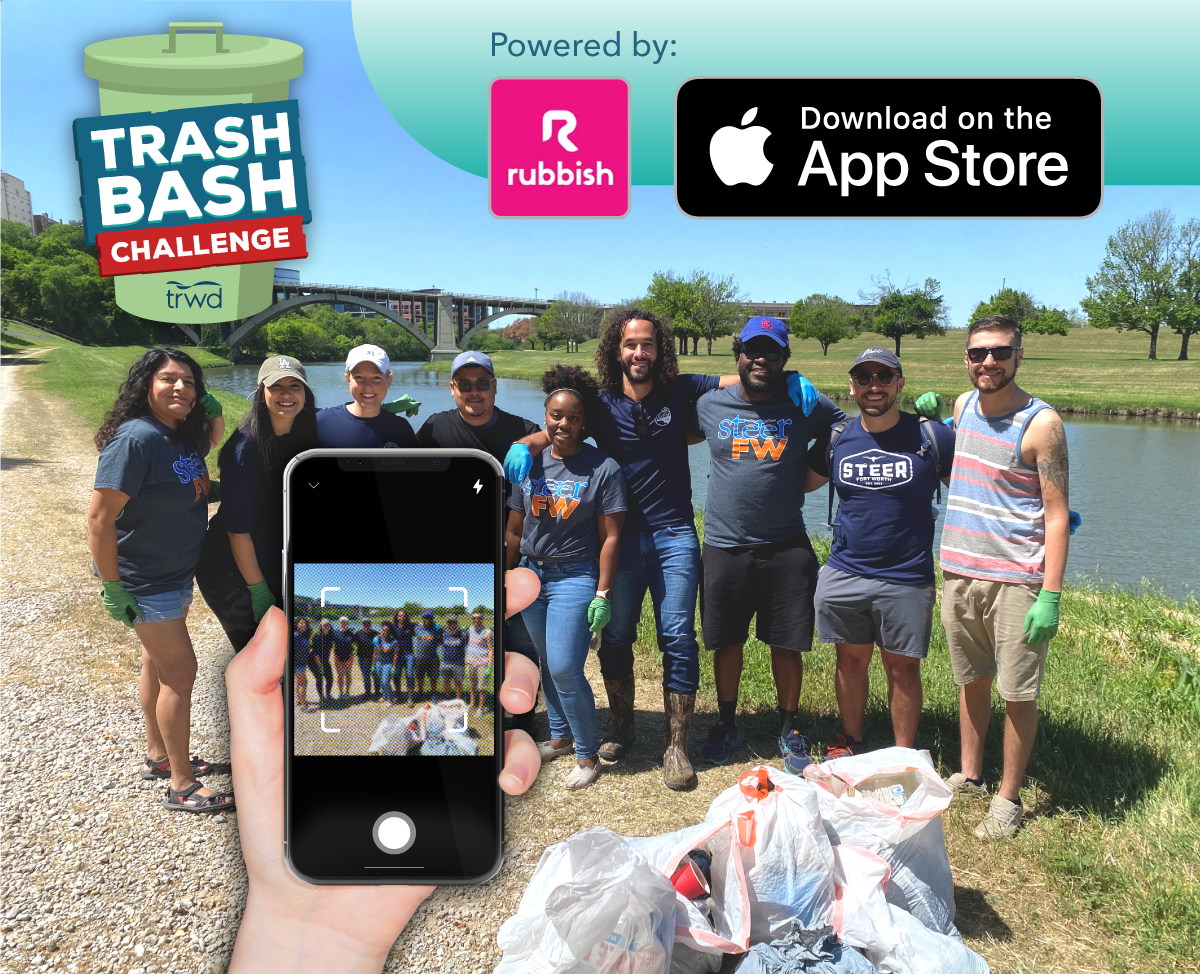
Another cleanup opportunity is the Trash Bash Challenge, an ongoing effort throughout the year that gives people a chance to work on their own in an area that’s convenient. The Challenge started during the pandemic when social distancing was key, Muñoz says, and it continues to be a great way that people can participate at any time, without waiting for a Trash Bash event.
Volunteers take photos of the litter they collect through a mobile app called Rubbish, which analyzes and categorizes each item, helping TRWD determine where and how to address special concerns at their source. This could mean installing more trash receptacles in certain areas, increasing cleanup efforts or engaging corporate partners to assist.
Groups and individuals can compete with each other, viewing and comparing their collections through the app as they go along, with the top three contributors recognized at the end of each year.
Since it was launched, the Trash Bash Challenge has been integrated into Adopt-A-Trail and Adopt-A-Drain collection efforts, with a wide variety of volunteers documenting more than 76,000 pieces of litter successfully removed from local waterways. This year’s goal is to raise that number to 100,000.
Supplies
For all of the year-round cleanup efforts, TRWD provides sustainably-sourced gloves and trash bags on request, which can be picked up at any TRWD office or scheduled for delivery if within 20 miles of the District’s central office in Fort Worth. Adopters also receive sunscreen, insect repellant and hand sanitizers as a thank-you for their efforts.
The hands of many
Cleanup is an ongoing, year-round effort. In addition to community support, TRWD Operations crews, seasonal staff and UpSpire apprenticeship workers all help maintain the parks, levees and trails. Litter traps and specialized floating devices are also deployed along the Trinity to help catch surface water trash and debris.
“It’s all interconnected, and everyone’s effort goes a long way in helping to protect our natural resources,” Muñoz says.
“We see volunteers of every age, from parents teaching their toddlers about cleanup, to high school and college-age service groups, to retirees generously giving of their time and energy. There are no limits on participation – and no limits on what we can do together.”