By Sally Crocker
When you think of Tarrant Regional Water District, what’s the first thing that comes to mind? Water? Absolutely, but did you know there’s so much more to what TRWD does and how the District is helping to take care of the land that Texas residents call home?
Kate Zielke is TRWD’s Rural Programs Supervisor. She’s part of the TRWD Environmental Services department. Kate works with agricultural landowners and producers on watershed protection strategies safeguarding the streams, rivers and reservoirs across rural areas. A watershed is an area of land where rain and other types of water drain across valleys and fields, flowing downhill into a basin or reservoir, like those at Eagle Mountain and Cedar Creek lakes, Richland-Chambers Lake, and Lake Bridgeport. Efforts to mitigate erosion help ensure that the runoff stays cleaner and that agricultural producers keep more soil on their land. Reservoirs with less sediment can hold more water, while the surrounding land for growing and grazing stays fertile and intact.
Zielke also works with non-profits to restore native vegetation, which provides a habitat for wildlife. TRWD’s partnership with the Western Navarro Bobwhite Recovery Initiative is just one example, that’s successfully providing a habitat for Bobwhite Quail, a native Texas bird with a long history in the state.
Additionally, she’s involved in education and outreach efforts for non-agricultural related areas that can also benefit local watersheds and reservoirs.
“Our programs create benefits for both landowners and the watersheds and reservoirs. Everybody wins,” she says.
Zielke started her career as a journalist and later completed a master’s degree in environmental science, with a focus on stream ecology and technical writing. She joined TRWD in 2025.
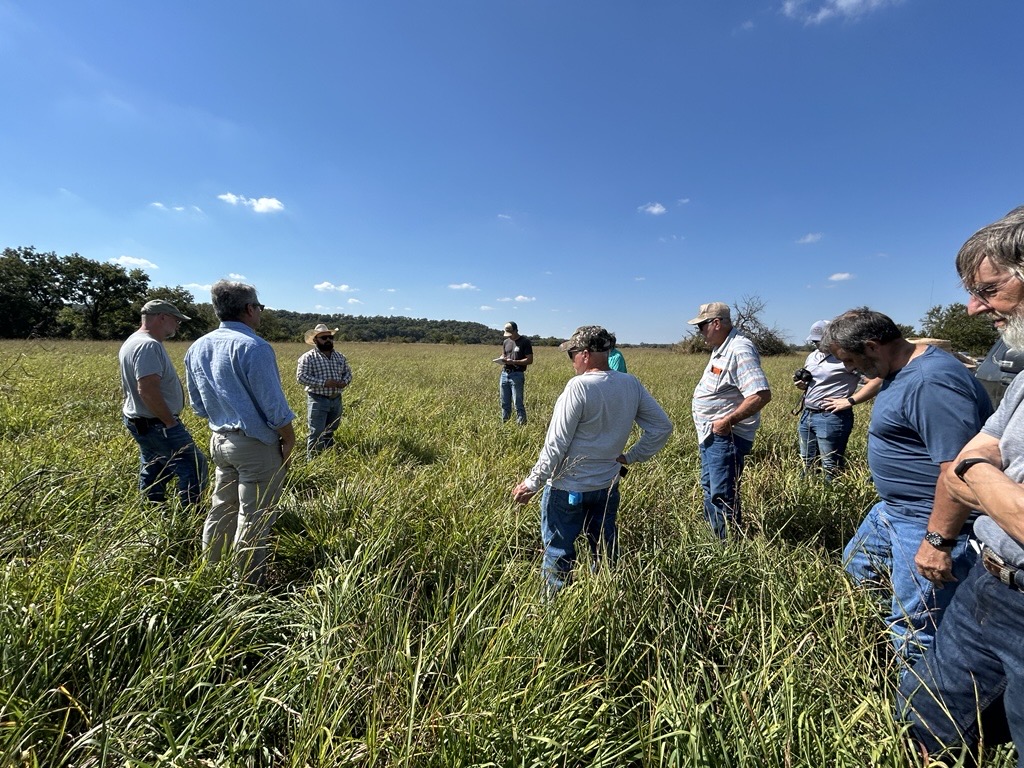
Her days vary widely. One week, she might be working on watershed protection plans or partnering with different Soil and Water Conservation Districts on implementation strategies to address those plans. She might attend events that bring together agricultural producers and staff from resource agencies like Texas Parks & Wildlife or Texas A&M AgriLife. She might be touring agricultural regions, or seeking input on different programs with the Department of Agriculture’s Natural Resources Conservation Service.
“Kate works across local, state and federal levels,” says her supervisor Aaron Hoff, TRWD Watershed Programs Manager.
“For example,” he notes, “a producer or landowner in an area around Lake Bridgeport or another local lake might want to convert their grassland from an invasive species to a native species for improved soil health and drought resistance. Fencing, seed and other materials might be needed. To help cover those costs, the landowner/producer could apply to the Natural Resources Conservation Service for partial reimbursement of the project’s cost through the Environmental Quality Incentives Program, or apply for other, similar opportunities. The local Soil and Water Conservation District may then select that producer for additional funding under TRWD’s Watershed Protection Program.”
“Our team has a large region to cover, so partnerships like this are important in helping to achieve water quality protection and land restoration goals.”
Hoff grew up in the Red River Basin near Wichita Falls, Texas, and has long felt a kinship with water and the environment. His hometown was, and still is, small. He graduated in a class of less than 40 students. His parents were dairy farmers, and every day throughout junior high and high school, he woke up early to feed and care for the cows on their property. One aspect of life in a small town that confused and frustrated him was how hard it was getting water supply to everyone. The study of water supply, water scarcity, management of resources and how it all affects farmers and the community led him to pursue a master’s degree, and now currently a doctorate, focused on these areas.
His interest lies in how humans live in the natural environment and how to do that better while co-existing with modern development.
“Hopefully, we leave our mark in a way that is sensible for humans, the animals we rely on, and the species we live with,” he says.
Hoff joined TRWD in 2020 and manages a staff of five that serves seven different conservation districts, covering 5,000 sq. miles of watershed, and working with both urban and rural communities, from as small as his hometown to populations like Fort Worth, totaling in the millions. For each lake that TRWD manages, there is a contributing watershed.
Much like Zielke and her team work in rural communities, TRWD’s urban watershed division, led by Michelle Wood-Ramirez with other colleagues in Hoff’s department, is focused on water protection and conservation efforts in cities and the built environment. It’s the same focus, whether urban or rural.
The goal for TRWD in both urban and rural communities, Hoff says, is “to keep our water clean and to be good stewards of the land.”
Team members like Zielke are fully on board with that mission.
“I’m so happy to be doing work that is a public service,” Zielke says.