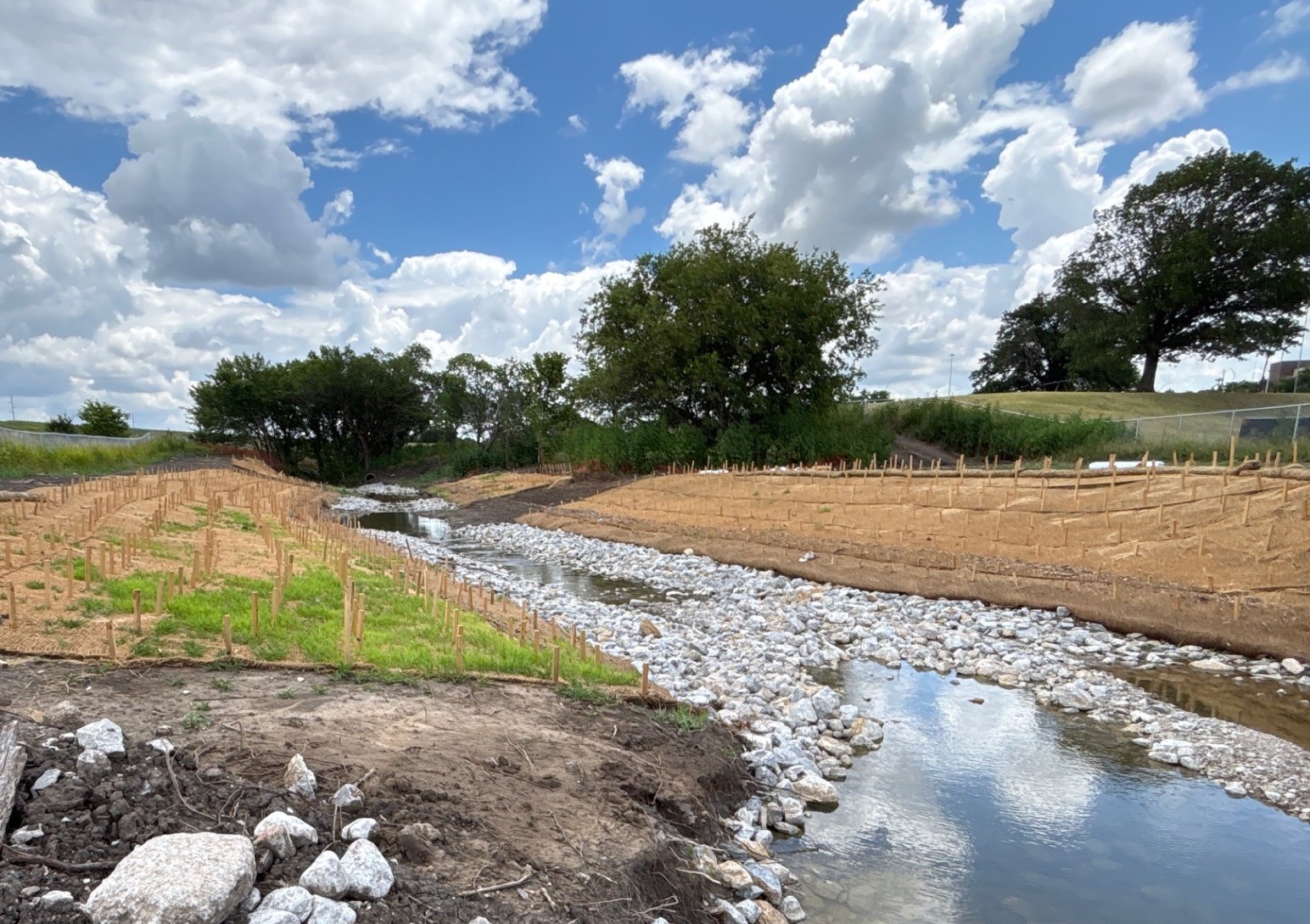
As part of the Central City Flood Control Project, an urban stream on the northeast corner of the I-35W/ I-30 interchange in Fort Worth is in the process of becoming a thriving natural ecosystem.
Led by the U.S. Army Corps of Engineers in partnership with TRWD and the City of Fort Worth, this project will restore Ham Branch’s natural stream bed and banks, reestablish a streamside corridor, and revive wetland habitat that has been lost over time.
Habitat Mitigation is an important part of any US Army Corps of Engineers project. It involves compensating for adverse impacts to aquatic and other habitat resources that results from a USACE‑authorized project.
This important restoration is essential to the flood control project. It’s transforming nearly 2,000 linear feet of degraded urban stream channel, reestablishing native trees and vegetation across a nearly 8-acre corridor and creating a wetland habitat.
In addition to habitat restoration, the project includes installation of an upstream trash collection system to reduce trash carried downstream, improve fish passage between Ham Branch and the Trinity River, and increase the floodplain’s capacity to store stormwater.
The project represents an important balance between flood risk management and environmental stewardship, creating lasting ecological benefits while supporting the broader Central City Flood Control Project, which is designed to reduce flood risk and protect thousands of homes and businesses, and over one million people in the 10th largest city in the country.
Construction of the Ham Branch Habitat Mitigation Feature is currently underway and is expected to be complete by the end of the year.